
PowerEdge R7515 Servers
The Dell PowerEdge R7515 is the single-socket AMD EPYC 2U: up to 64 cores, 128 PCIe Gen4 lanes, and big storage headroom — maximum capability per licensed socket.


The Dell PowerEdge R7515 is the single-socket AMD EPYC 2U: up to 64 cores, 128 PCIe Gen4 lanes, and big storage headroom — maximum capability per licensed socket.
The Dell PowerEdge R7515 is a powerful and highly scalable 2U rack server designed for businesses that need strong performance, flexible storage, and excellent value in a single-socket platform. Built around AMD EPYC 7002 and 7003 series processors, the R7515 delivers impressive core density, memory bandwidth, and PCIe Gen4 expansion for demanding workloads such as virtualization, software-defined storage, data analytics, databases, ecommerce, backup, and high-performance computing. With its combination of efficient single-processor performance, high-capacity DDR4 memory support, and flexible drive configurations, the PowerEdge R7515 is an excellent choice for organizations looking to expand their IT infrastructure without moving to a dual-socket server.
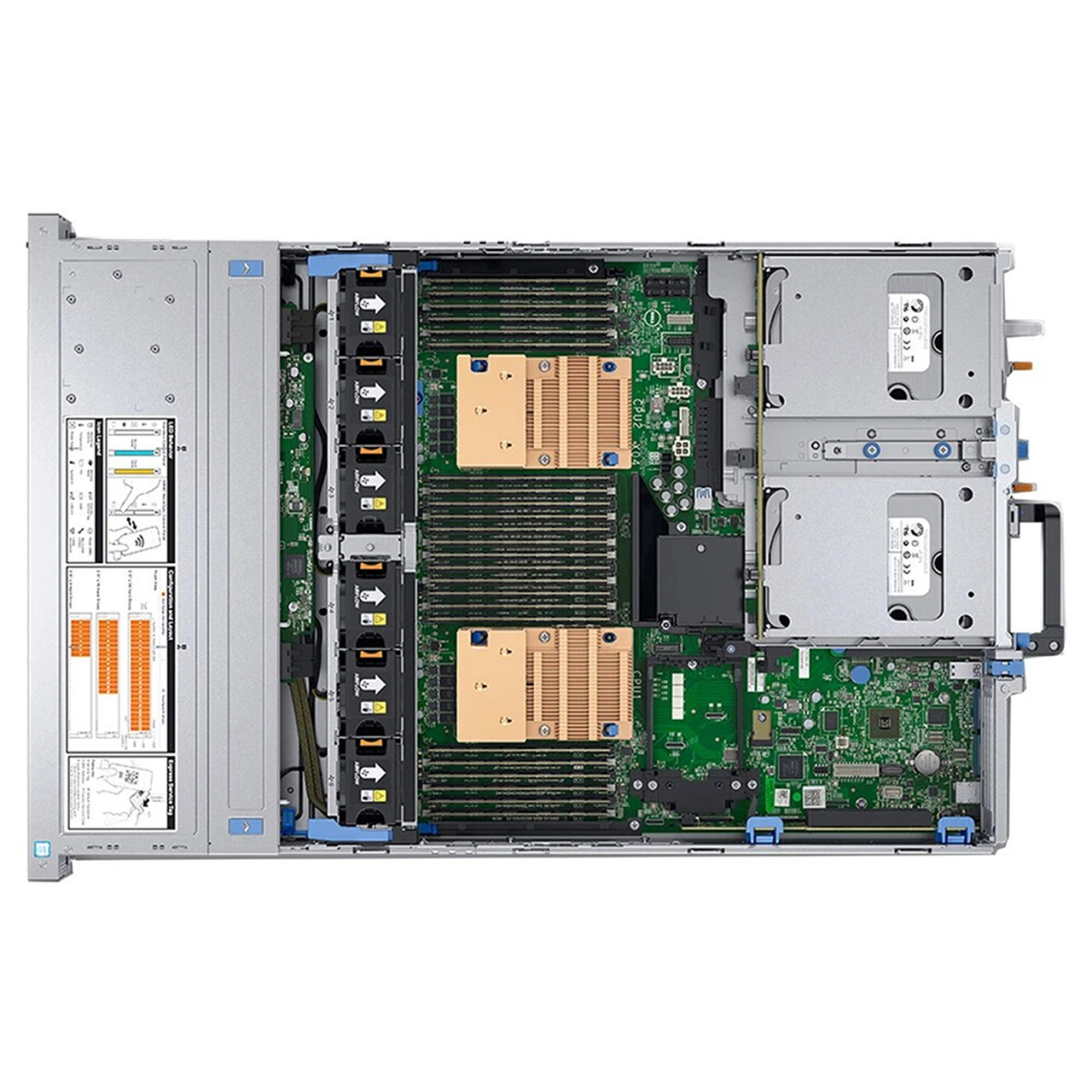
The Dell PowerEdge R7515 features a 2U rackmount chassis built for enterprise data centers, small business server rooms, and growing IT environments. Its 2U form factor provides more room for storage, cooling, and expansion than a compact 1U platform while still fitting efficiently into standard server racks. The R7515 is designed for easy serviceability, strong airflow, and dependable 24/7 operation, making it a reliable foundation for production workloads, storage-heavy deployments, and performance-focused business applications.
At the core of the Dell PowerEdge R7515 is support for one AMD EPYC 7002 or 7003 series processor, allowing businesses to take advantage of high core counts, strong multi-threaded performance, and excellent memory bandwidth in a cost-effective single-socket server. With AMD EPYC processors offering up to 64 cores in a single CPU, the R7515 can handle demanding workloads that would traditionally require more complex dual-socket platforms. This makes it a strong option for virtualization, analytics, database workloads, web hosting, private cloud infrastructure, and software-defined storage environments.
The PowerEdge R7515 supports up to 16 DDR4 DIMM slots, giving businesses the ability to configure the system with high-capacity memory for modern enterprise workloads. With support for DDR4 RDIMM and LRDIMM memory, the R7515 can be built for capacity, speed, or balanced performance depending on the application. This memory scalability makes the server well suited for virtual machines, databases, analytics platforms, caching workloads, and other applications that benefit from fast and reliable system memory.
The Dell PowerEdge R7515 offers flexible storage options across multiple chassis and backplane configurations, including 2.5-inch and 3.5-inch drive layouts with support for SAS, SATA, and NVMe storage depending on the specific configuration. This allows the R7515 to be tailored for high-capacity storage, fast SSD performance, or mixed storage environments. With Dell PERC RAID and HBA controller options available, the server can be configured for redundancy, performance, direct-attached storage, or software-defined storage deployments. Whether used for file storage, backup, virtualization datastores, database storage, or high-throughput applications, the R7515 provides the storage flexibility needed for growing businesses.
The Dell PowerEdge R7515 supports PCIe Gen4 expansion, giving businesses increased bandwidth for modern networking, storage, and acceleration hardware. PCIe Gen4 support makes the R7515 a strong platform for high-speed network adapters, NVMe storage controllers, Fibre Channel cards, GPU options, and other expansion devices. This level of I/O flexibility allows organizations to scale the server as workload demands change over time.
Reliable network connectivity is essential for enterprise workloads, and the PowerEdge R7515 offers flexible network configuration options to fit a wide range of environments. Depending on configuration, the system can support Gigabit Ethernet, 10GbE, 25GbE, and other high-speed network adapters for virtualization, storage traffic, backups, application hosting, and data center connectivity. This makes the R7515 a versatile choice for businesses that need dependable network performance and room to grow.
The Dell PowerEdge R7515 includes Dell iDRAC9 remote management technology, giving IT administrators the tools needed to monitor, manage, update, and troubleshoot the server remotely. iDRAC9 helps streamline deployment and maintenance by reducing the need for physical access to the system. Combined with Dell Lifecycle Controller and Dell’s enterprise security features, the R7515 helps businesses improve uptime, simplify administration, and maintain a secure server environment.
The PowerEdge R7515 is designed to deliver strong performance while maintaining the efficiency benefits of a single-socket AMD EPYC architecture. By offering high core counts and large memory capacity from one processor, the R7515 can help reduce hardware complexity while still supporting demanding workloads. Its redundant power supply options, efficient cooling design, and Dell PowerEdge engineering make it a dependable choice for businesses running always-on applications and critical infrastructure.
The Dell PowerEdge R7515 is ideal for businesses that need a powerful single-socket server for virtualization, software-defined storage, data analytics, database hosting, ecommerce platforms, file and backup storage, web hosting, private cloud, development environments, and high-performance computing. Its strong AMD EPYC performance, high memory capacity, storage flexibility, and PCIe Gen4 expansion make it a practical solution for organizations that need enterprise performance without the added cost or complexity of a dual-socket server.
The Dell PowerEdge R7515 is a highly capable 2U rack server that combines single-socket AMD EPYC performance, scalable DDR4 memory, flexible storage options, PCIe Gen4 expansion, and Dell enterprise manageability. It is an excellent fit for businesses that need a balance of performance, storage density, reliability, and long-term scalability. Whether deployed for virtualization, software-defined storage, databases, analytics, backup, or business-critical applications, the Dell PowerEdge R7515 provides outstanding value in a refurbished enterprise server platform.
Dell PowerEdge R7515 Spec Sheet.pdf
Dell PowerEdge R7515 Technical Guide.pdf
Dell PowerEdge R7515 Technical Specifications Guide.pdf
Dell PowerEdge R7515 Installation and Service Manual.pdf