PowerEdge T560 Server
The Dell PowerEdge T560 is Dell's current dual-socket tower — 4th Gen Xeon Scalable with DDR5, NVMe bays, and GPU support for offices that need serious compute without a server room.


The Dell PowerEdge T560 is Dell's current dual-socket tower — 4th Gen Xeon Scalable with DDR5, NVMe bays, and GPU support for offices that need serious compute without a server room.
The Dell PowerEdge R560 is a versatile 2U rack server designed for businesses that need dependable performance, flexible storage, scalable memory, and enterprise-class manageability in a balanced rackmount platform. Built as part of Dell’s PowerEdge server family, the R560 is well suited for small to medium-sized businesses, remote offices, branch locations, data centers, and growing IT environments that need more capability than an entry-level server while maintaining a practical cost of ownership. With support for Intel Xeon Scalable processors, DDR5 memory, flexible drive configurations, PCIe expansion, and Dell iDRAC remote management, the PowerEdge R560 provides a strong foundation for business applications, virtualization, file storage, backup, databases, and infrastructure services.
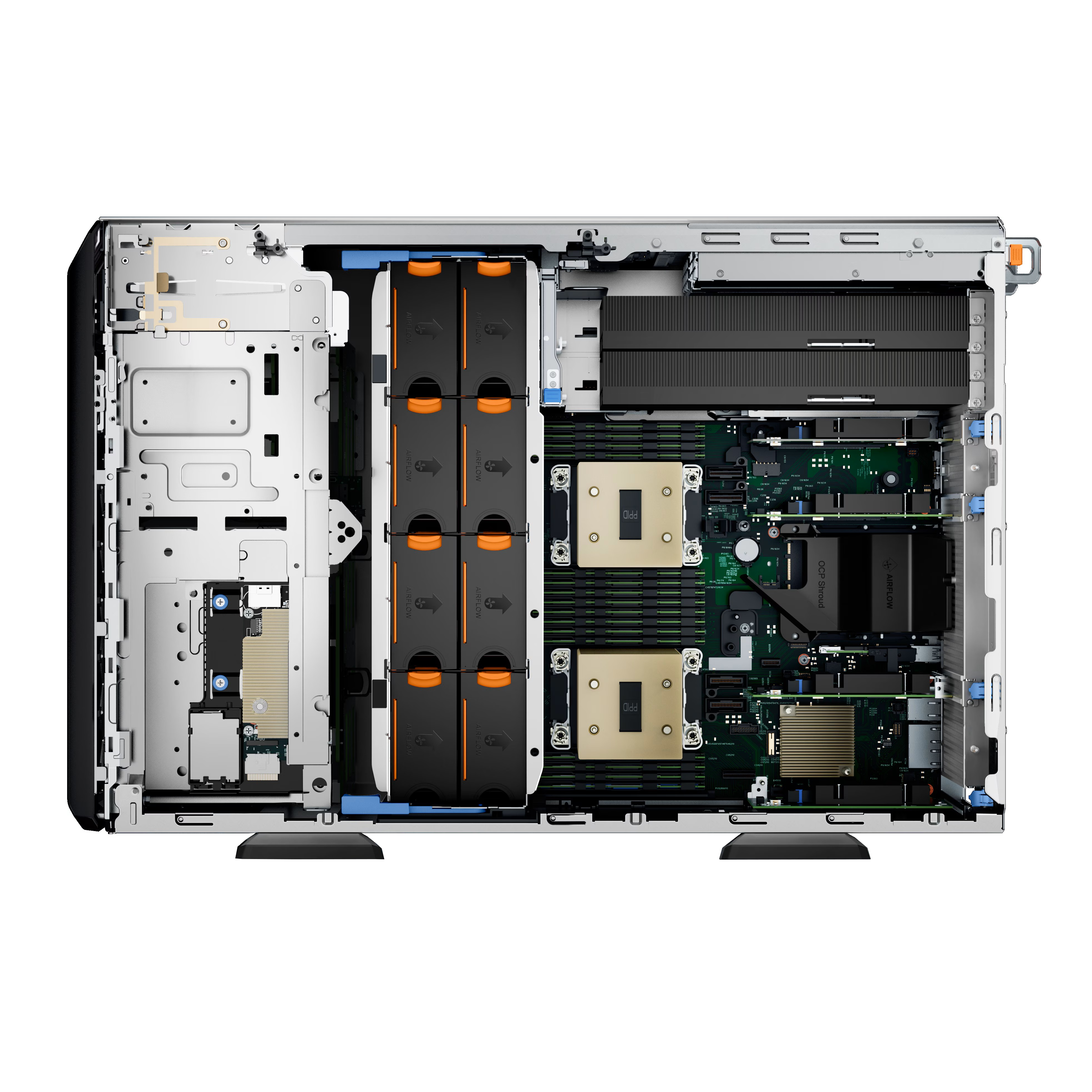
The Dell PowerEdge R560 features a 2U rackmount chassis designed to provide a practical balance of performance, storage flexibility, expansion capability, and serviceability. Its 2U form factor gives businesses more room for drive bays, airflow, power supplies, and expansion options compared to many compact 1U systems, while still fitting efficiently into standard server racks. This makes the R560 a strong choice for organizations that need reliable rack server performance for core business infrastructure, local storage, backup, virtualization, and application hosting.
At the core of the Dell PowerEdge R560 is support for Intel Xeon Scalable processor configurations, giving businesses the compute performance needed for modern business workloads. The R560 is designed to handle daily infrastructure services, business applications, databases, web services, file sharing, backup tasks, and virtualization environments. Its two-socket platform provides room to scale processing power as needs grow, making it a practical option for organizations that want a server capable of supporting both current workloads and future expansion.
The PowerEdge R560 supports DDR5 memory, helping improve bandwidth and efficiency compared to previous-generation DDR4 platforms. This makes the R560 a strong fit for workloads that benefit from responsive memory performance, including virtualization, database support, business applications, analytics, and multitasking across multiple services. With scalable memory configuration options, the R560 can be built to match a wide range of business needs, from general infrastructure support to more demanding production workloads.
The Dell PowerEdge R560 offers flexible storage configurations to support both performance-focused and capacity-focused deployments. Depending on the selected chassis and backplane configuration, the R560 can be configured with small form factor or large form factor drive options, including SAS, SATA, SSD, HDD, and NVMe storage depending on the final build. This flexibility allows businesses to create a server optimized for fast SSD application storage, high-capacity hard drive storage, backup repositories, file sharing, database storage, or mixed-use environments. Compatible Dell PERC RAID and HBA controller options can help provide redundancy, performance, and data protection for important workloads.
The PowerEdge R560 provides expansion capability for businesses that need additional networking, storage control, or specialized I/O. Depending on the configuration, the system can support compatible PCIe expansion cards, upgraded network adapters, RAID controllers, HBAs, and other enterprise add-ons. This makes the R560 a flexible platform for businesses that need to adapt their server to changing infrastructure requirements, such as faster networking, improved storage performance, or additional connectivity.
Dell’s Integrated Dell Remote Access Controller provides remote management capabilities for the PowerEdge R560, allowing administrators to monitor, manage, update, and troubleshoot the server remotely. iDRAC helps reduce hands-on maintenance, improve system visibility, and simplify lifecycle management for IT teams and managed service providers. This is especially useful for branch offices, distributed environments, and businesses that want enterprise-level management tools without requiring constant physical access to the server.
The Dell PowerEdge R560 includes PowerEdge security and reliability features designed to help protect business data, firmware, and system integrity. Secure management options, trusted platform features, firmware protections, and Dell’s server-grade design help support dependable operation for important business workloads. Combined with efficient cooling, redundant power supply options depending on configuration, and serviceable components, the R560 is built for reliable operation in professional IT environments.
The Dell PowerEdge R560 is best suited for:
The Dell PowerEdge R560 server delivers a strong mix of performance, storage flexibility, manageability, and reliability for modern business environments. With Intel Xeon Scalable processor support, DDR5 memory, flexible storage configurations, PCIe expansion, Dell iDRAC management, and PowerEdge enterprise engineering, the R560 is a practical choice for organizations that need a dependable 2U rack server for virtualization, business applications, backup, file storage, databases, and infrastructure services. Whether deployed in a small business, branch office, data center, or growing IT environment, the Dell PowerEdge R560 provides a scalable and efficient platform for everyday business workloads.